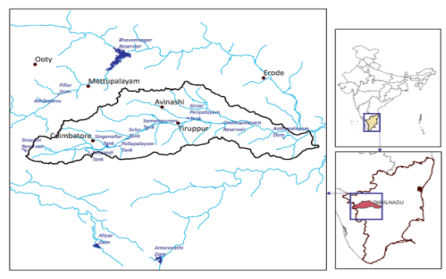
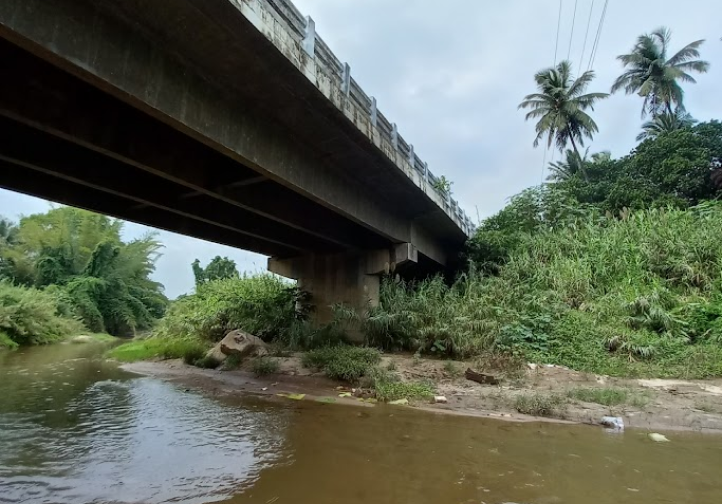
The river is 180 km long
Covers 36, 304 Acres in the basin
the stretch has 23 Dams & 32 Tanks
history of noyyal River
The Noyyal river, also known as Kanchimanadhi in ancient times, is a vital resource that provides drinking water for millions of people in Tamil Nadu, India. Ancient civilizations flourished along its banks, harnessing its life-giving waters for agriculture and trade. The river has witnessed the rise and fall of empires, and its stories are etched in the landscape of Tamil Nadu.
The historic Noyyal River originating from the sacred Velliangiri Mountains (a division of the Nilgiri Biosphere Reserve) is located at the Western Ghats mountain ranges border of Coimbatore in the southern state of Tamil Nadu. The Noyyal River is considered a sacred river in Tamil History. Initially this river was also known as Kanchimanadhi, but later called as Noyyal which means ‘one which has minute particles to relive diseases’.
The source of Noyyal River being the Velliangiri hills, abode of Lord Shiva in different yuga, called as South-Kailash. The holy water flows through Coimbatore, Tiruppur, Erode and Karur district a distance of 180Km and merges with Cauvery River near Noyyal village in Karur.
Periyarru and Cheyyarru are some of the most significant tributaries of Noyyal River. Periyarru pours out of the Siruvani Hills and the Kovai Kutralam, an iconic waterfall of Coimbatore. Cheyyarru courses through Chaadivayal and along with the other streams to culminate at Kooduthurai (in Mathvarayapuram village panchayath) which finally becomes Kanchimanadhi.
Subsequently, going through a length of 180 km. A tributary Kalingarayan channel which passes through Kodumudi Thaluk merges with Noyyal River at chellandiamman temple point. River Kaveri gets abundance of water at this point of merging at Noyyal village (karur dist). This is stated by Karikal Cholan who built Kallanai. Apart from these 2 tributaries, there are a lot of other streamlets that are connecting Noyyal. Such as Kaushika (Vannathankkarai) and Nallaaru. Nonetheless, many of the streamlets find water only during showery times of the year. Noyyal River has 23 check dams and river noyyal flows through 32 system tanks as well. While Aathupalayam and Orathuppalayam reservoirs which are most significant ones.
ABOUT US
The Noyyalaaru Trust is a legally registered firm having the registered office entrusted by Thavathiru. Marudhasala
Adigal and Thavathiru. Kumaragurubara Swamigal on the support of the Akhila Bharateeya Sanyasees Sangam and
with the support of the NGO’s like Siruthuli, Isha Foundation, Art of Living, ResidentsAwareness Association of
Coimbatore (RAAC), Faremers Association and other volunteered organization including the educational institutions
like Amrita University, Karpagam University, Karunya University, industrialist and the general public. The aim of this
Trust is to Rejuvenate and Restore the Noyyal river as in the 11th century.
The Noyyalaaru Trust is a beacon of hope for the Noyyal river. The trust is committed to the rejuvenation of the river
and is working tirelessly to restore its purity and health. The trust’s holistic approach integrates community
involvement, Innovative solutions, and environmental stewardship.
archaeological Significance
Excavated remains of storage tanks, check dams and channels dating back to the Chalukya and Chola period, have been discovered across the Noyyal river. These tanks and channels not only provided storage and transport but also helped in control of groundwater levels and diverting of extra water to channels for diverting floods.
challenges
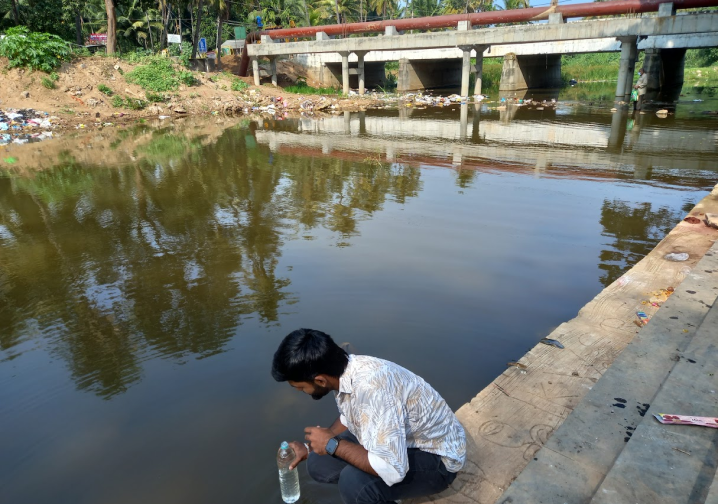
The Noyyal River, being a nature spot is not away from the controversies as a report submitted by the National
Environmental Engineering Research Institute said that the contamination degree in the water sample gathered by the
officers from the Noyyal River was very much above the acceptable criteria. The storage tanks were a crucial
component in refilling the spring water through infiltration of the under-soil body of water. As urbanization developed,
the arrangement was disregarded and the number of operational storage tanks was reduced in a drastic manner as only
11 storage tanks were left. Nowadays, the arrangement functions no more and water is deficient when compared with
the demand. As a result, farming has significantly reduced and the lacking irrigation water supply impacted in
thousands of Coconut trees in the region left to dry up.
A critical issue is the pollution of the rivers Noyyal and Nallaru originating and flowing in the Kongu Nadu region. The
river flows with natural antibiotic minerals. The entire Orathuppalayam Dam has become a tank holding effluent and
releases water after every rainfall, effectively polluting the down river villages in the Tirupur and Karur district.
However, from 2004 on wards, efforts by local volunteers organization Siruthuli have been trying to conserve the water
resource. After several petitions from 2003 to 2011, dying and bleaching units were ordered closed on the river until
zero liquid discharge status was achieved. On 9 July 2018, the chief minister of Tamil Nadu announced that a sum of
Rs. 150 crores would be earmarked for preventing pollution in of Noyyal within Tirupur city limits.
current
scenario
Condition of river
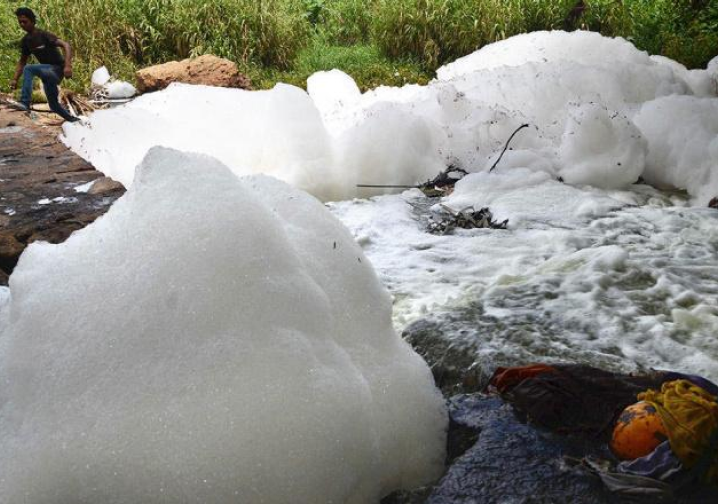
This river Noyyal is filled with a lot of encroachments and Pollutants these days. Then the textile industries have left a huge impact on the river by polluting with the chemicals and the effluents. Additionally, Oruthuppalayam Dam is acting as the effluent tank for the textile industries of Tirupur.
Alkalinity in river Noyyal is more than the permissible level for drinking water fixed by the Bureau of Indian Standards.
Water polluted with effluents
flowing over the check dam
near Anaipalayam village
in Tiruppur district.
The textile industries have left a huge impact on the river by polluting with the chemicals and the effluents. Oruthuppalayam Dam is acting as the effluent tank for the textile industries of Tirupur.

what we’ve done
our vision
To Save, Protect the interests of NOYYAL River
also known as “KanchimaNadhi” , its Tributaries
and Basin Areas from origin up to the confluence
of Noyyal River with Cauvery River at Noyyal Village
near Kodumudi through Clean Noyyal River initiatives.
our mission
To Save, Protect the interests of NOYYAL River
also known as “KanchimaNadhi” , its Tributaries
and Basin Areas from origin up to the confluence
of Noyyal River with Cauvery River at Noyyal Village
near Kodumudi through Clean Noyyal River initiatives.
Help protect and preserve